
You Already Have a Brand
It exists whether or not you designed it. This lesson gives you the mechanism to stop being perceived by default.
Your personal brand is the meaning people assign to you, based on repeated signals.
Not your logo.
Not your website.
Not your intention.
Not even your skill set.
Meaning. And meaning determines opportunity.
Your brand is not a visual identity. It is the pattern of interpretation that forms in other people’s minds. Two people can meet you once and leave with completely different conclusions. Why? Because perception is not observation. Perception is interpretation. Which means: If you don’t manage signals, people construct meaning on their own.
The Perception Equation
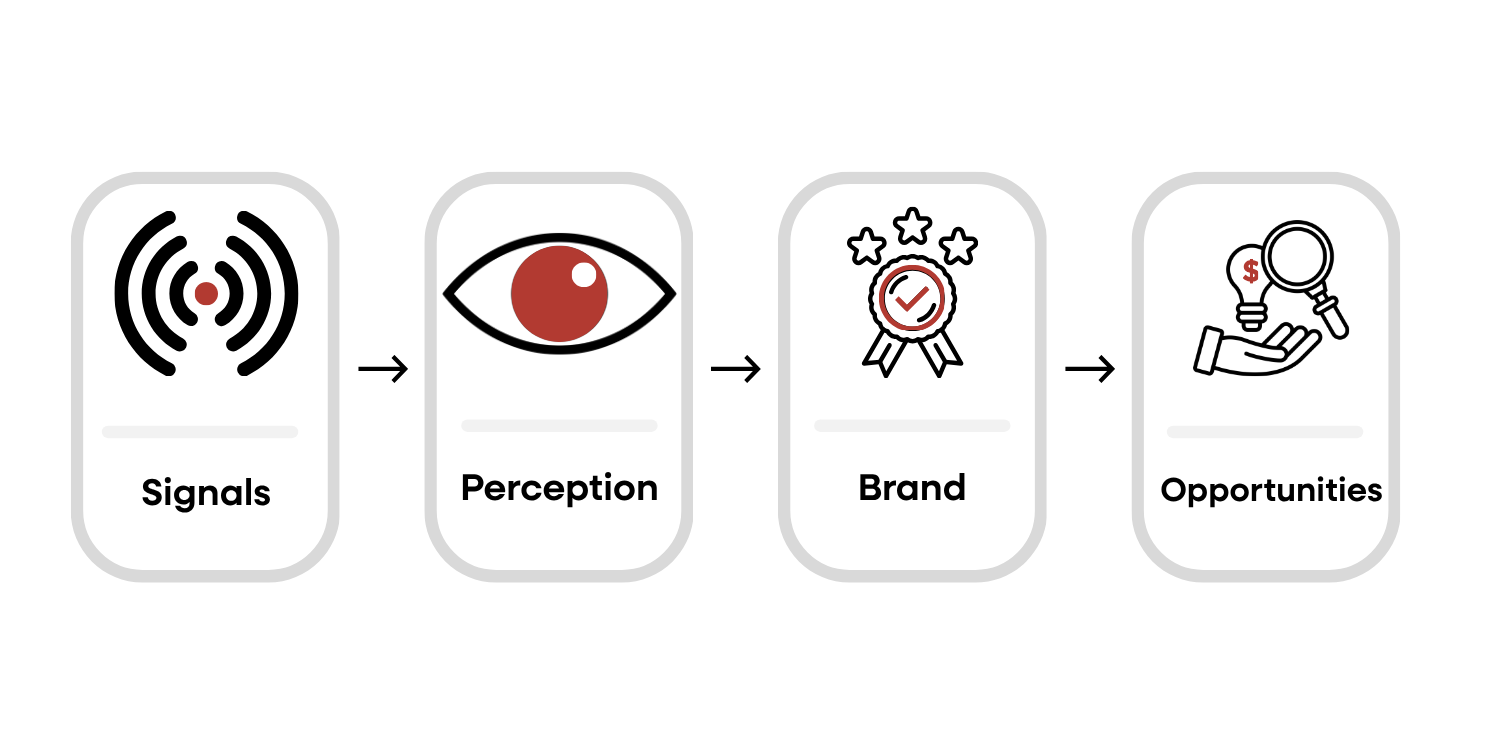
1. Signals — What Is Observable
Signals are everything people can see, hear, or experience about you.
- What you say and how you say it
- How you show up online
- What you post and what you avoid
- Your titles, photos, tone, consistency
- What others say about you (proof, referrals)
- Your associations
Signals are raw data. They are neutral. But they are never invisible.
2. Perception — The Interpretation Layer
Signals enter the human brain.
The brain filters them through: Prior experience. Bias. Expectations. Context. Pattern recognition.
People don’t “see you.” They interpret you.
And interpretation happens in seconds.
3. Brand — The Repeated Meaning
Your brand is not a moment. It is the pattern that repeats across minds.
If five people independently describe you using similar words, you have a brand pattern.
If descriptions vary wildly, you have signal inconsistency.
Brand = repeated interpretation.
4. Opportunities — The Output Layer
Opportunities are not random. They are consequences of meaning.
Invitations.
Referrals. Trust. Pricing power. Leadership credibility. “I thought of you for this.”
If people associate you with clarity, they bring clarity problems. If they associate you with strategy, they bring strategic decisions.
If they associate you with confusion, they hesitate.
Opportunity flow reflects perception structure.
You cannot directly control perception. But you can control signals. Signals are the only leverage point in the equation. When signals become intentional,
perception becomes directional. When perception becomes directional, the brand becomes consistent. When a brand becomes consistent, opportunities compound.
The Three Signals That Currently Shape How People Treat You
Before changing anything, diagnose:
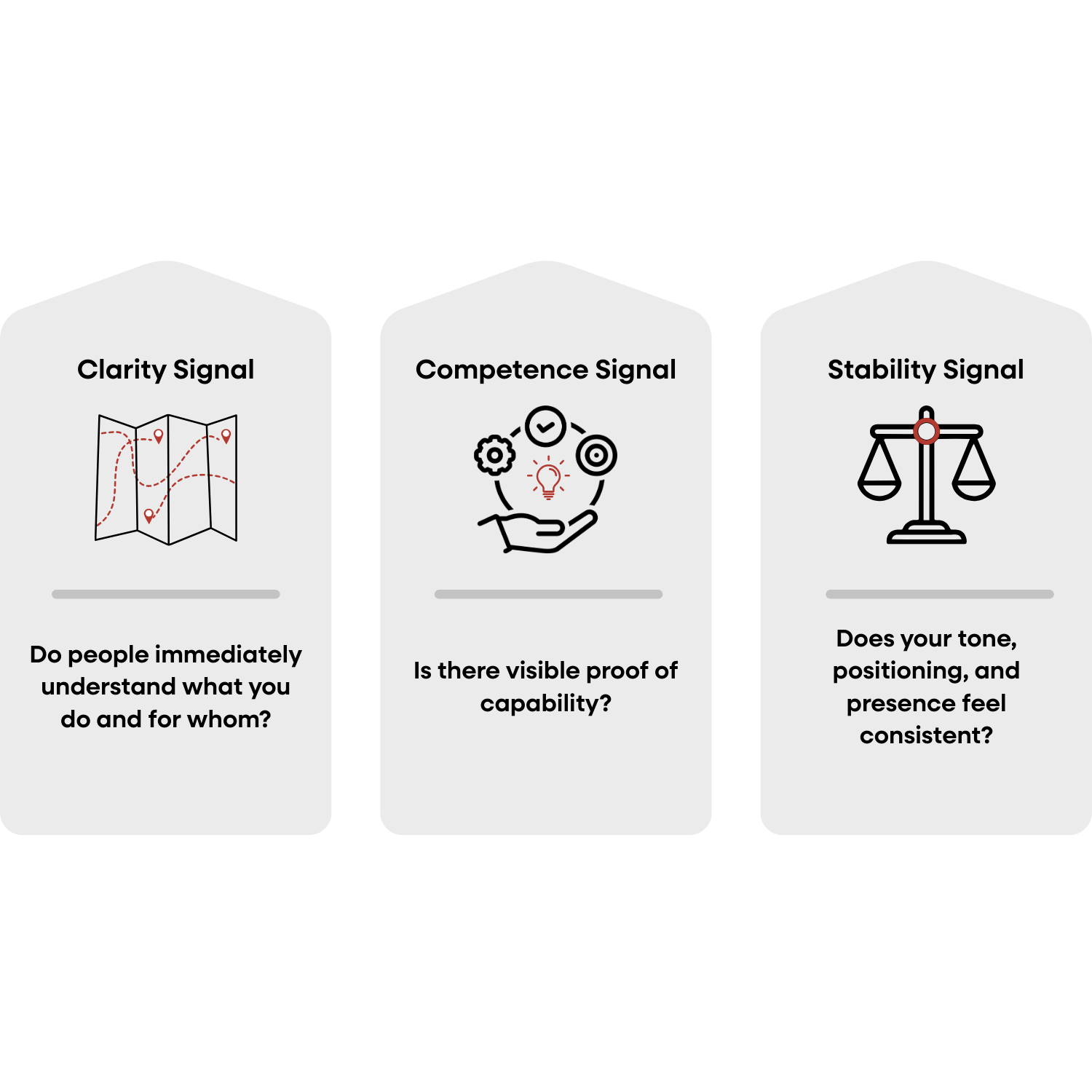
These three signals largely determine:
- Whether people trust you
- Whether they refer you
- Whether they pay a premium
- Whether they hesitate
Strategic Shift
Stop asking: “How do I improve my brand?” Start asking: “What signals am I currently sending?”
Because a brand is not self-expression.
Brand is signal architecture. And architecture determines outcome.