
Skip to content

Skip to content

Course Content
Module 1: Different Cultures, Different Habits
We all grow up with habits that feel natural, but they’re shaped by culture, family, and environment. In this module, you’ll explore how everyday behaviors like eye contact, personal space, or punctuality differ across cultures and why noticing these differences helps us understand and connect better.
0/3
Module 2: Black, Indigenous, People of Colour
This module explores the origins and meaning of the term BIPoC, showing how histories of colonialism still shape bias, privilege, and exclusion today. By understanding these patterns, including the often invisible dynamics of White Privilege, we learn to see not just individuals, but the systems around them, and how awareness can drive change.
0/6
Module 3: Lesbian, Gay, Bisexual, Trans*, Queer*, Inter*, Asexual +
This module explores the histories and meanings behind LGBTIQA+ identities, showing how systems of heteronormativity and cisnormativity shape what is seen as "normal" and what is excluded. By examining privilege, resilience, and the ongoing impact of religion, medicine, and colonialism, you’ll learn to recognize patterns of exclusion and respond with awareness and respect.
0/7
Module 4: People with Disabilities
This module explores disability not only as an individual experience, but also as a social and political identity shaped by ableism and privilege. By examining history, language, and everyday barriers, you’ll learn to recognize exclusionary patterns and respond with greater awareness and respect.
0/7
Module 5: Gender
This module explores how ideas of gender were historically constructed through religion, law, medicine, and culture and how they continue to shape roles, opportunities, and expectations today. By examining gender privilege and questioning inherited norms, you’ll learn to see gender not as a fixed truth, but as a system that can be challenged and transformed.
0/6
Module 6: Let’s face it
In this final module, we bring the threads together: we revisit the myths of ‘normality,’ reflect on how inequality is constructed, and highlight that transformation is possible. It’s a closing lens that makes clear why diversity matters for all of us, not as theory, but as a practice we can carry forward.
0/3
How to Start Embracing “Diversity” Without Feeling Overwhelmed


Habits and Behaviour: How We Interpret Them

 

Imagine a in Thailand socialized person and a Russia socialized person meeting for the first time.
The Thai person smiles warmly, because in their culture, a smile is a sign of respect, harmony, and kindness.
The Russian person doesn’t smile, because in their culture, smiling at strangers can be seen as insincere or even foolish.

What do they think of each other?
One might feel ignored. The other might feel misunderstood.

Neither is wrong. Neither is rude.
They’re simply acting according to what they’ve learned.


Our Culture Influences Our Perspective

Where we come from shapes how we see the world and how we interpret others. These habits, beliefs, and expectations are not neutral. They’re deeply rooted in history, language, and lived experience.

And sometimes, what we learn includes ideas that are unfair. Biases. Stereotypes. Assumptions.

These can distort how we see others and how others see us.

Consider how many people in, so called, “industrialized nations” view Africa. The image of mud huts, poverty, and “tribal” simplicity is widespread.
Rarely is Africa seen as what it truly is: a vast continent with 54 countries, thousands of cultures, and bustling metropolises like Lagos, Nairobi, and Johannesburg.

This narrow lens affects how people perceive individuals from African nations. It can lead to assumptions: less educated, less advanced, less capable. These biases are not just inaccurate, they’re harmful.

They shape policies, media narratives, and interpersonal dynamics. And they often stem from colonial histories that framed Africa as a place to be “civilized” or “saved.”


Perspectives In History Influences Our Perspectives

Take a moment to reflect on this: In 1493, Christopher Columbus wrote that the Indigenous peoples of the Americas traded gold for trinkets. To him, this was a sign of naivety. But what if they simply valued gold differently? What if they had no concept of wealth as accumulation?

That single interpretation rooted in a European, capitalist worldview helped shape a narrative that still lingers today.
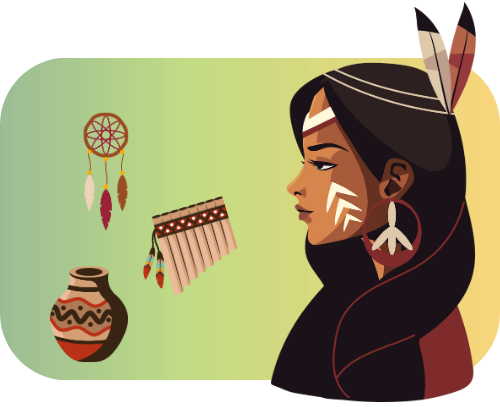
That Indigenous peoples were “simple,” “primitive,” or “foolish.”

But perspective is not truth. Columbus is seen by some as a heroic explorer. By others, especially Indigenous communities, he is remembered as a violent conqueror.

This is the power of perception. It can build bridges or reinforce walls. It can honor difference or erase it.

When we begin to question what we’ve learned, we open the door to deeper understanding. Not just of others, but of ourselves.


0% Complete

Need help on setting up your courses?

Didn’t find what you were looking for? If you didn’t come across a feature that fits your needs or have a specific question, feel free to reach out.

Have a course idea in mind?

Do you have a question?

Didn’t find what you were looking for?
If you didn’t come across a course that fits your needs or have a specific question, feel free to reach out.

Can’t find the right
training for you?

Looking for information on something else?
If you didn’t find a course that meets your needs, let us know! We’re happy to create new trainings based on what people are looking for.